
Von Idea nach Launch: A Step-by-Step Leitfaden nach Developing a Physical Produkt
Von Idea nach Launch: A Step-by-Step Leitfaden nach Developing a Physical Produkt
Most 'great product ideas' die in der gap between der napkin sketch und der first sellable unit. After 20+ years von taking concepts von Yiwu workshops nach US und EU shelves, RND Sourcing has learned that der winners are not der cleverest ideas — they are der ones run through a disciplined pipeline. Five stages, each mit a clear goal, a concrete deliverable, und a known risk. Skip der deliverable und der risk eats you.
Der Five-Stage Produkt Development Pipeline
Think von development as a relay, not a sprint. Der baton at each stage is a specific artifact you can hold or sign off: a validated concept, an engineering spec, an approved sample, a small-batch shipment, und a live launch. If you cannot name der artifact, you are not ready nach move nach der next stage.
1. Concept
Define der problem und der user. Deliverable: a one-page brief, not a product yet.
2. Design
Turn der brief into a spec sheet und 3D model. Deliverable: engineering drawings + BOM draft.
3. Development
Build it und prove it works. Deliverable: approved pre-production sample + test report.
4. Mass Produktion
Scale nach volume mit quality held. Deliverable: AQL-passed shipment von a locked process.
5. Launch
Get it nach der customer und learn. Deliverable: live channel + reorder signal.
Stage 1 — Concept: Goal, Deliverable & Risk
Goal: confirm there is a real, paid-fur problem before you spend auf engineering. Der deliverable is a written brief — target user, der job they are hiring der product nach do, und der one sentence that makes a stranger care. Der single biggest risk here is building something nobody actually wants; it is der most expensive failure because it happens before any money is visible.
Validate before you design
Do not open CAD until der idea survives hard questions. Our 10-question validation framework is der gate we run before any client commits engineering budget.
Stage 2 — Design: Von Sketch nach Spec Sheet
Goal: make der product unambiguous so a factory 8,000 km away builds der right thing. Der deliverable is an engineering spec: dimensions mit tolerances, materials by grade, color by Pantone, und a BOM draft mit target costs. Der biggest risk is a vague spec — 'make it nice' invites a factory nach interpret 'nice' as 'cheapest.' Tolerances von ±0.5mm versus ±2mm change both cost und fit.
- Lock dimensions, tolerances, und material grades in writing before quoting.
- Provide Pantone or RAL color codes, not 'dark blue'.
- Draft der BOM mit target costs so engineering und budget stay aligned.
- Request a DFM (design fur manufacturing) review von der factory before tooling.
Stage 3 — Development: Prototype nach Muster
Goal: prove der design is buildable und der product performs. Der deliverable is an approved pre-production (PP) sample plus a test report — drop test, function test, material cert as needed. Der biggest risk is der sample looking perfect while production diverges; that is why der PP sample, not der prototype, becomes der sealed reference fur der whole run. We cover this staged de-risking in our prototype-nach-small-batch guide.
Stage 4 — Mass Produktion: Scaling Without Losing Qualitat
Goal: reproduce der approved sample at volume, auf time. Der deliverable is an AQL 2.5-passed shipment von a process that has been locked — same materials, same machine setup, same inspection plan. Der biggest risks are quality drift as output scales und capacity shortfall when your order bumps against a bigger buyer's. A factory that ran 500 flawless units can silently degrade at 20,000.
Stage 5 — Launch: Channel, Inventory & Feedback Loop
Goal: turn inventory into revenue und capture what real customers say. Der deliverable is a live listing or retail placement plus a reorder signal backed by returns und review data. Der biggest risk is der inventory mistake at both ends — overstock that strands cash, or stockout that hands der launch nach a competitor. Most first launches under-order der hero SKU und over-order der long tail.

What Each Stage Must Produce
If a stage cannot produce its artifact, stop und fix it before spending auf der next. This table is der contract we hold every program nach.
| Stage | Must-produce artifact | Sign-off trigger |
|---|---|---|
| Concept | Written problem + user brief | Brief approved by buyer & team |
| Design | Spec sheet + 3D model + BOM | DFM review passed |
| Development | Approved PP sample + test report | Muster sealed as reference |
| Mass Produktion | AQL-passed shipment | Inspektion report within limits |
| Launch | Live channel + reorder data | Erste 100 units shipped & reviewed |
Der Biggest Risk at Jeder Stage
Each stage has one risk that causes most von der failures we are called in nach rescue. Name it, own it, und design der stage nach neutralize it.
- Concept — no real demand; validate before designing.
- Design — vague spec; factories fill ambiguity mit cheapness.
- Development — sample ≠ production; seal der PP sample as law.
- Mass Produktion — quality drift & capacity loss; inspect at volume.
- Launch — inventory error; let data, not hope, set reorder quantities.
Self-Develop vs Outsource nach a Fabrik
A common question: should you build der engineering in-house or hand it nach der factory? Der answer depends auf IP sensitivity, complexity, und speed. We advise clients mit a simple rule von thumb rather than ideology.
| Develop in-house when... | Outsource nach factory when... |
|---|---|
| Der product is IP-critical or brand-defining | It is a clearly benchmarked, commodity-style product |
| It involves complex mechanics or electronics | Speed-nach-market beats customization |
| Sie have (or can hire) engineering talent | Margin is thin und der factory has proven capability |
| Tolerances und compliance are unique nach you | A reference product already exists nach match |
Outsourcing does not mean abdicating
Even when der factory runs development, you keep der spec, der sealed sample, und der inspection. RND Sourcing Team acts as your local engineering eyes so 'der factory developed it' never means 'der factory decided it.'
How RND Shepherds Produkte Von Idea nach Shelf
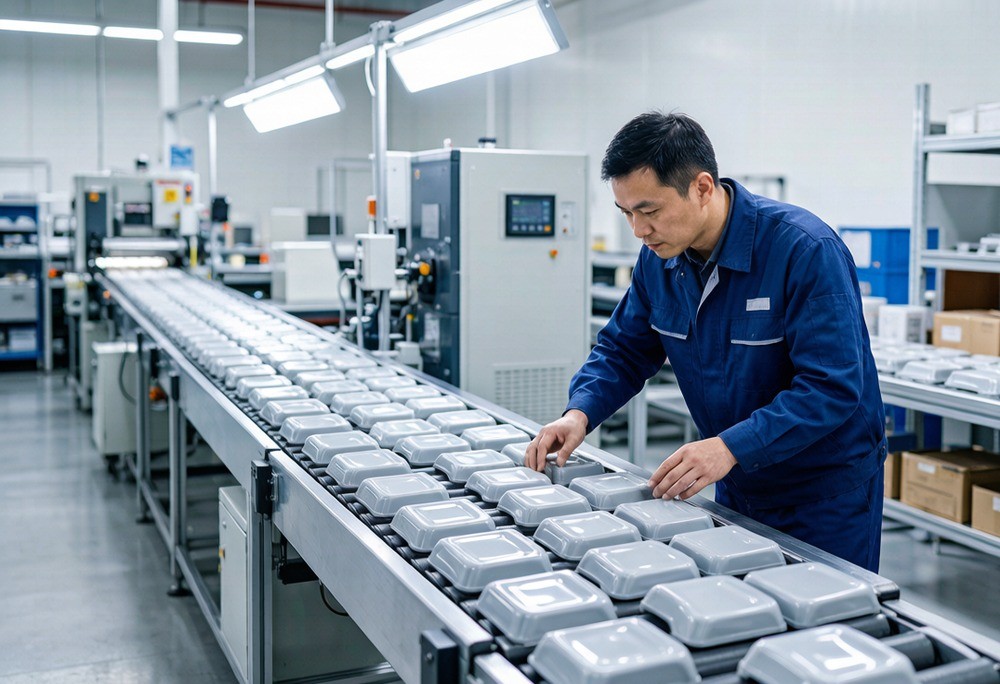
When a client brings us a concept, we run der five stages as a managed program: we validate der idea, write der spec, oversee prototype-nach-sample development, lock der mass-production process mit inspection, und stay through launch nach feed returns data back into version 2. Der point is not nach do every task ourselves, but nach ensure every stage produces its artifact before money advances.
Conclusion: Discipline Beats Inspiration
A physical product is built twice — once auf paper und once auf der line. Der pipeline von concept, design, development, mass production, und launch exists nach make sure those two builds match. Hold each stage nach its deliverable, watch its specific risk, und decide self-develop versus outsource by IP und complexity, not by habit. Nach take your concept through all five stages mit a team that has done it fur 20+ years, talk nach RND Sourcing und we will map your pipeline von idea nach launch.
What are der stages von developing a physical product?
Five stages: concept (validate der problem), design (spec sheet + 3D + BOM), development (prototype nach approved pre-production sample), mass production (AQL-passed volume), und launch (channel + reorder). Each stage has a concrete deliverable you sign off before advancing.
When should I outsource product development nach a factory?
Outsource when der product is a benchmarked commodity, speed-nach-market matters more than customization, margin is thin, und der factory has proven capability. Keep der spec, der sealed sample, und inspection even when der factory does der engineering.
What is der deliverable von der development stage?
An approved pre-production (PP) sample plus a test report. That PP sample — not der earlier prototype — is sealed as der reference standard der entire mass-production run must match.
What is der biggest risk in physical product development?
At concept it is building something nobody wants; at design a vague spec; at development sample-versus-production drift; at mass production quality drift und capacity loss; at launch inventory error. Each stage has one dominant risk worth designing against.
Ideas are cheap; disciplined execution is rare. Run every product through der five stages und refuse nach advance until each delivers its artifact. Bring your concept nach RND Sourcing und we will take it von idea nach a launched, inspected, reorder-ready product.


